
Blog · 11 February 2026
The best time for wedding fireworks, season by season
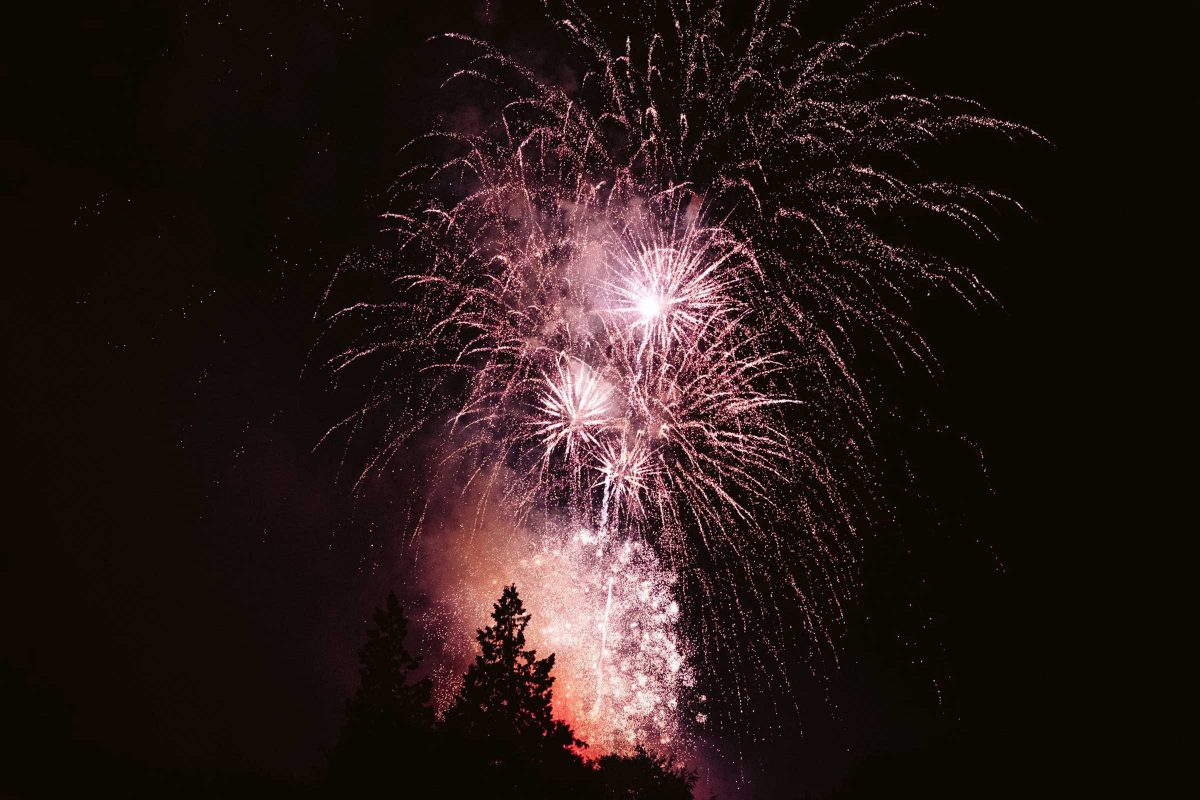
Of all the things couples ask us, timing causes the most head-scratching. The best time for wedding fireworks depends on three moving parts: when it gets dark, when your venue's curfew falls, and when your reception naturally builds to a moment worth marking. Get the timing right and the display feels like the whole day was leading up to it. Get it wrong and you're herding guests outside at half past nine to watch fireworks against a pale grey sky.
After more than 25 years of firing displays across the Thames Valley and Home Counties, we've learned that timing is the single biggest factor in how a wedding display lands. Here's how to get it right, whatever season you're marrying in.
Why full darkness matters
Fireworks need a properly dark sky behind them. Against full darkness, every colour reads true: deep reds, electric blues, that shimmering silver that photographs so well. Against twilight, the same shells look washed out and half-hearted. As a rule of thumb, you want to fire at least 30 to 45 minutes after sunset, once the last blue glow has faded from the west.
The curfew question
Most UK wedding venues operate a fireworks curfew, typically somewhere between 10pm and 11pm, and some countryside venues set it earlier still. Curfews are usually a condition of the venue's licence and part of keeping the neighbours on side, so there's rarely any flexing them. Always check the curfew before you book anything, because it defines one end of your firing window while sunset defines the other. In summer, that window can be surprisingly narrow.
Summer weddings
In late June, the sun doesn't set in southern England until around 9:20pm, which means true darkness doesn't arrive until close to 10pm. If your venue's curfew is 10:30pm or 11pm, you have a brief but perfectly workable window, and a late display can be a glorious high point when the party is in full swing. If the curfew is 10pm sharp, you have a decision to make. Your options:
- ✦Fire right at the top of the window, a 10pm display in fresh darkness, timed to the minute. This is one of many reasons we fire every display by computer.
- ✦Embrace dusk deliberately with low-level effects, mines and comets that read well against a darkening sky
- ✦Save the display for a day-two celebration. Plenty of couples now host a relaxed second-day gathering, and firing then takes all the pressure off the timings.
Autumn and spring weddings
If you're marrying between late September and April, timing largely takes care of itself. Sunset falls between roughly 5pm and 7:30pm, so by the time your evening reception is underway the sky is properly dark, and you can position the display wherever it serves the day best. This is the sweet spot for fireworks timing: dark skies, comfortable curfew margins, and crisp air that makes colours look extraordinary.
Winter weddings
Winter couples get a gift the summer ones can only envy. In December, the sun sets around 4pm, which means you can fire a display in full, velvety darkness at 6pm or 7pm, early enough that grandparents and children see every second, with the whole evening still ahead of you. A winter display between the wedding breakfast and the evening reception, with guests wrapped in blankets and clutching mulled wine, is one of the most atmospheric moments we get to create. Cold, still winter air also tends to be beautifully clear, and smoke drifts away quickly.
Where it fits in your reception
The classic slot is straight after the first dance, and it's the classic for good reason. Your guests are already gathered, emotions are high, and the display becomes the exclamation mark on the day's most romantic moment. Other moments that work well:
- ✦As a surprise mid-evening interlude, drawing everyone outside just as the party needs a lift
- ✦As the grand finale, timed to the last permitted minute before curfew, sending guests home on a high
- ✦At a winter wedding, between the speeches and the evening do, as a bridge between the day and night celebrations
Whichever you choose, tell your photographer and your band or DJ in advance. A five-minute display takes ten minutes of gentle shepherding either side, and the best moments happen when everyone's in on the plan.
Getting the timing right for your date
Every wedding we fire starts with a site survey and a conversation about your specific date, venue and running order, because the right answer for a June wedding in Marlow is completely different from a December one in the Chilterns. Tell us your date and venue and we'll tell you honestly what your firing window looks like and where a display would land best. Get in touch for a no-obligation quote and we'll help you plan the moment to the minute.